


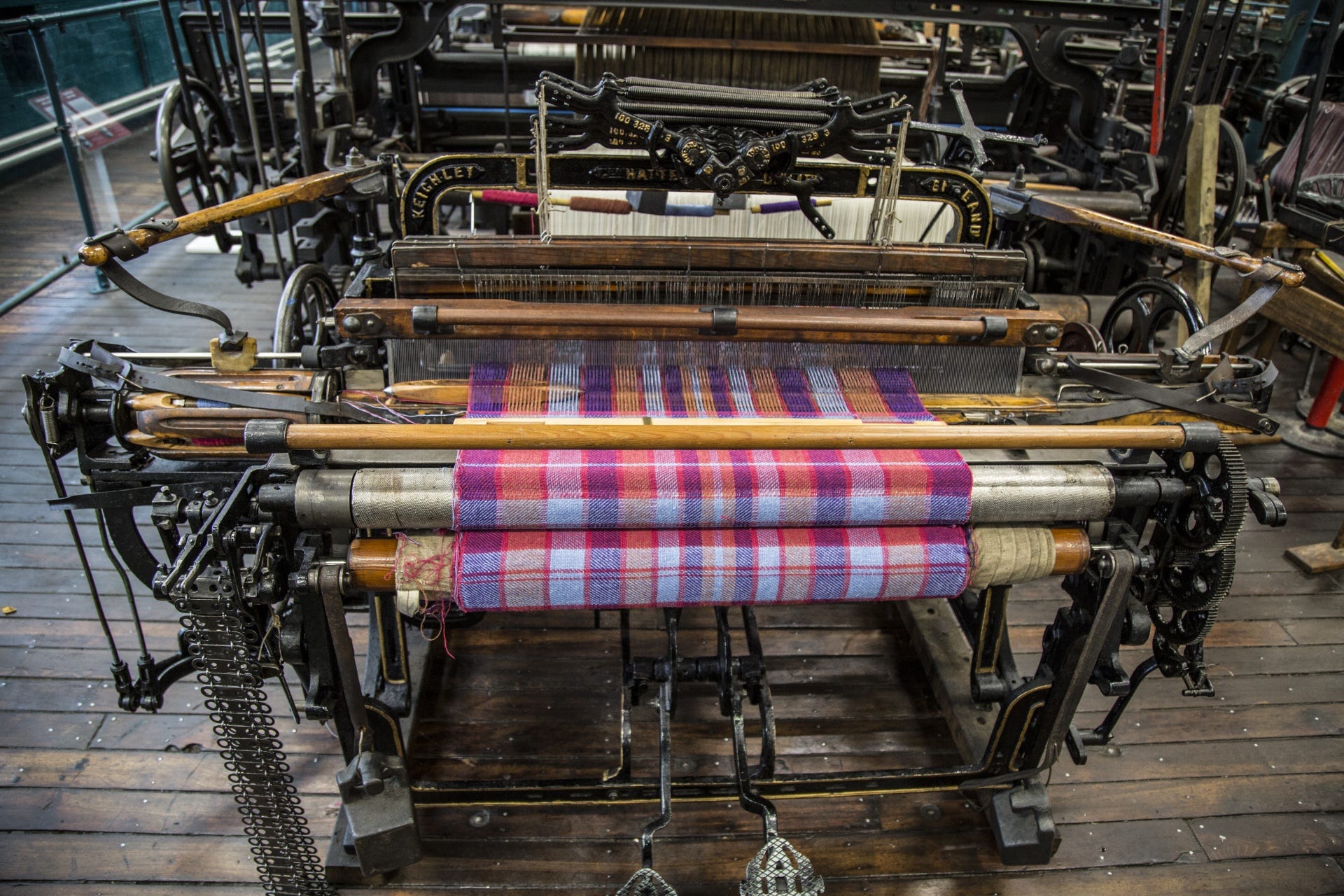
This week, Nathan Gill has written an article reminding us of the importance of the manual arts in classical education. He surveys a number of voices from the tradition and then notes the importance of the common arts for the cultivation of wisdom. In brief, Gill makes the case for the common arts because they develop an attention to the world and skilled response to it. Austin Hoffman’s Artes Mechanicae series likewise considers the relation of the mechanical arts to the liberal arts and how they can lead us on the path to wisdom.
Gill closes the piece by enumerating several other reason why classical schools should embrace the common arts. They provide for the goods and necessities of life. Our graduates, while they should be intellectually capable, may not be called to intellectual work as a vocation. Many of them will need practical, hands-on skills to make a living in the world. White-collar work is changing rapidly, especially with AI’s utopian promises. The blue-collar trades appear as an attractive option that allow for the exercise of discernment while providing for the goods of the body. Gill argues that reclaiming the common arts will also contribute to “owned space” of Christian craftsman, serve to keep classical students tethered to the real world, and provide the resources necessary to serve other Christians’ needs.
The Greystone Institute, after reading Hugh of St. Victor, came to similar conclusions regarding the importance of the common arts in the cultivation of wisdom. In fact, this cultivation of skill through the mundane is so critical to prudential judgment that they created the Mechanical Arts Program as a standalone certificate but also as a requirement for their larger, ministerial degrees. There is something for the minister to learn about his work from farming, animal husbandry, woodworking, blacksmithing, bread baking, viticulture, medicine, and so on.
Classical Academic Press published Common Arts Education, a work dedicated to recovering the common arts. Its author, Christopher Hall, gives a brief defense of the common arts before launching into the implementation of various common arts in the school. This book doesn’t rely only upon theory, but provides examples (with plenty of pictures!).
We should note that while the classical tradition recognizes the necessity of the common arts, it often denigrated them as the realm of slaves or lower classes. Craftspeople are the lowest in the order of Plato’s Republic. Aristotle also places them lower on his hierarchy—the life of action is important, but lesser than the life of contemplation. In some framings, interaction with the material world is almost worthless. In gnostic or platonic systems, the material world is evil and corrupt. The higher life is spiritual and detached from existence.
However, the Christian doctrine of the incarnation was a direct answer to the gnostic/Platonic view which claimed that matter is evil. God’s taking on human flesh was the declaration that the matter or flesh itself was not evil, but only its corruption and rebellion from its creator. Therefore, the material world is good, insofar as it exists and is what God created. Gill notes that an emphasis on the common arts is a counter to such gnostic views that creep into our attitudes about the life of the body.
Towards the close of the article, Gill wonders if classical education is boxing graduates in to a low-paying teaching job. There are probably a number of factors that would need to be considered before a definite conclusion could be drawn. What is the job climate? What are the policies of a nation regarding foreign labor? Did graduates acquire a classical education—notably, did they learn to think logically and speak persuasively—or did they merely cram-pass-forget some classical content? While some occupations require specific technical skills (engineering, nursing, etc…), many are types of problem-solving. The more complex problems you are able to solve and then communicate those solutions to others, the more valuable you are.
It seems hard to imagine a student graduating from a classical school with, at minimum, a firm grasp of grammar, logic, and rhetoric being unable to attain a sufficiently-paying job—extenuating circumstances excepted such as economic collapse or idealogical discrimination. I would suggest that even the harsh job market should lead us deeper into the classical tradition and to consider its words about friendship (networking, social capital, etc.) and the trades.